
Pain Management Procedures
When pain keeps getting in the way, it may be time to look beyond temporary fixes.
Interventional pain management uses carefully targeted treatments to help identify where pain is coming from and, when appropriate, reduce the pain signals or inflammation contributing to it. The goal is not to chase every ache with a procedure. It is to understand the problem, choose the least invasive option that makes sense, and help you move more comfortably and function more fully.
Meet the APG Pain Management Team
-

Dr. Hamed Sadeghipour
Anesthesiologist, Associate Professor - Interventional Pain Specialist
APG Interventional Pain Director
-

Dr. Tong Zhu
PM&R Board Certified Physician - Interventional Pain Specialist
-

Christy Palmer
FNP-BC, Pain Specialist
Swansea
-

Jodi Lutz
FNP-BC, Pain Specialist
Edwardsville
-

Taylor Reno
FNP-C, Pain Specialist
Alton
-

Brad Sands
FNP-C, Pain Specialist
O’Fallon, IL
Pain management is not one-size-fits-all
Two people can have pain in the same general area for completely different reasons. Back pain may come from a joint, an irritated nerve, a disc, the sacroiliac joint, a muscle, or another structure. Headaches, shoulder pain, pelvic pain, and leg pain can be just as complicated.
That is why care begins with a medical history, an examination, and a review of any useful imaging or prior treatment. Some procedures are designed mainly to provide relief. Others are diagnostic, meaning the response helps your clinician determine whether a particular joint or nerve is truly contributing to the pain. In many cases, a procedure does both.
At Associated Physicians Group, Hamed Sadeghipour, MD, and the pain management team offer a broad range of image-guided injections, nerve blocks, radiofrequency treatments, and advanced pain therapies. The right recommendation depends on your diagnosis, health history, previous treatment, goals, and insurance requirements.
How interventional pain care usually works
1. Start with the source of the pain
Your symptoms, examination, imaging, and treatment history help narrow down which joint, nerve, muscle, tendon, or other structure may be responsible.
2. Choose a treatment with a clear purpose
A procedure may be recommended to reduce inflammation, temporarily numb a suspected pain source, interrupt pain signals, or test whether a more lasting treatment is likely to help.
3. Measure more than a pain score
Relief matters, but so does function. Your clinician may ask whether you can walk farther, sleep better, participate in therapy, return to work, or do daily activities more comfortably.
4. Build the next step around your response
A helpful response may support rehabilitation, a repeat treatment, radiofrequency ablation, nerve stimulation, or another carefully selected option. Little or no improvement can also provide useful information and redirect the plan.
Pain Procedures Commonly performed at APG
Click on the procedure names below to view an overview of the procedure.
Head, Neck & Headache
Shoulder, Arm & Hand
Chest, Ribs & Thoracic Spine
Neuromodulation & Advanced Therapy
Low Back, Hip & Pelvis
Sacroiliac Lateral Branch Blocks and Radiofrequency Ablation
Ischial Bursa, Ischiofemoral, and Iliotibial Band Injections
Knee, Ankle & Foot
Regional & Sympathetic Nerve Blocks
What to expect from a procedure
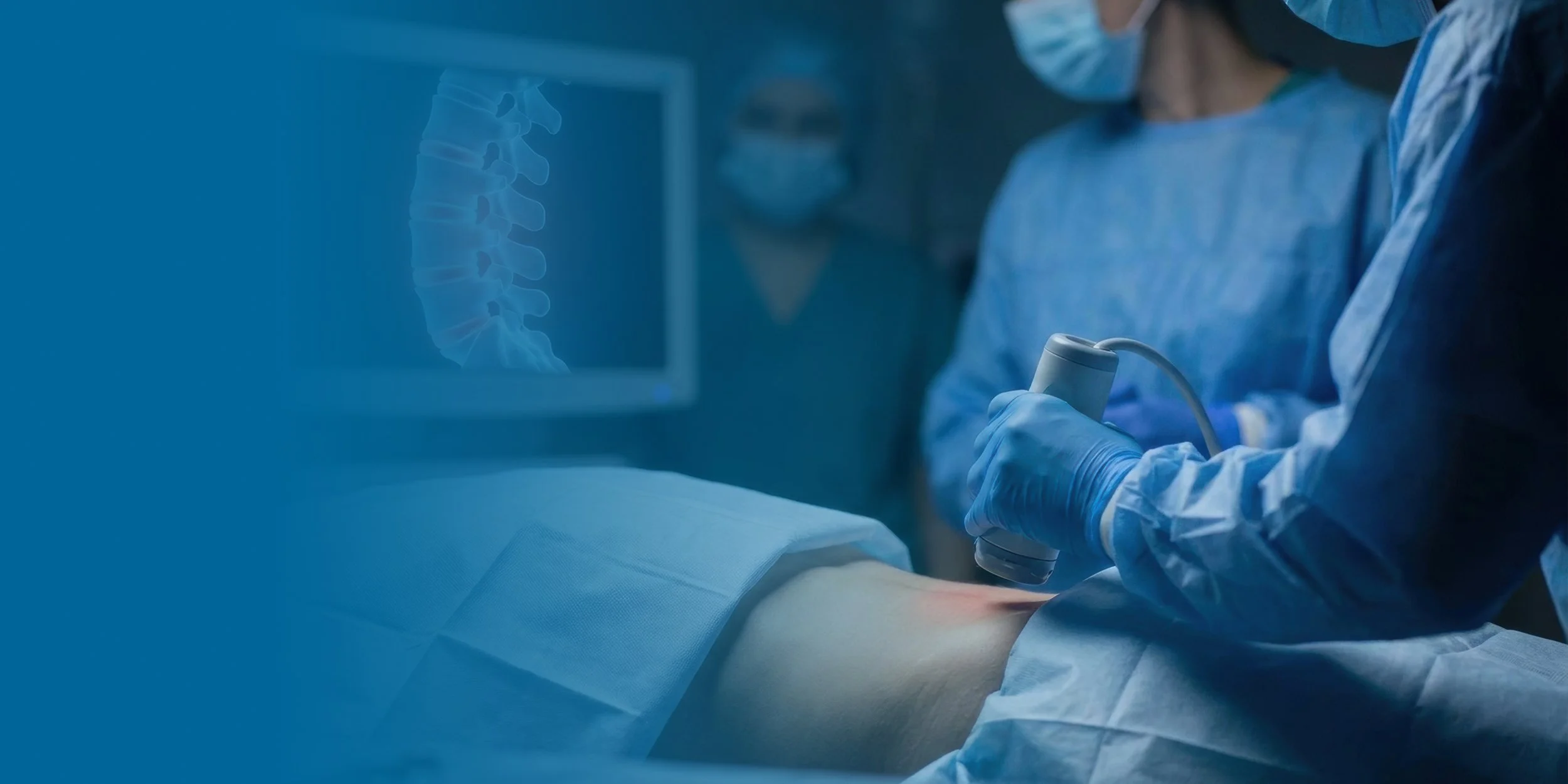
Many interventional pain procedures are performed on an outpatient basis. Depending on the treatment, ultrasound, fluoroscopy, CT, or another imaging method may be used to place a needle accurately and avoid nearby nerves, blood vessels, or organs. Local anesthetic is common; some procedures also use corticosteroid, another injectable medication, controlled radiofrequency energy, or a temporary or implanted device.
The treated area may feel sore, numb, heavy, or temporarily more painful afterward. Some medications act quickly, while others take several days to have an effect. Results vary. A procedure may provide substantial relief, modest improvement, brief diagnostic information, or no meaningful benefit. No procedure can guarantee a particular result.
Preparation and recovery instructions depend on the exact treatment. Always tell the APG team about blood-thinning medicines, diabetes, allergies, pregnancy, active infection, implanted electrical devices, and previous reactions to injections or anesthesia. Never stop a prescribed blood thinner unless the clinician managing it and the procedure team tell you how to do so safely.
Not every patient needs a procedure
Interventional treatment is one part of pain care, not a replacement for a complete evaluation. Medication, physical therapy, activity changes, exercise, behavioral strategies, and treatment of the underlying condition may remain important. In some cases, the safest and most useful recommendation is to start or continue conservative care including Physical Therapy, obtain additional testing, or see another specialist.
Ready to talk about your options?
If pain is limiting your work, sleep, mobility, or everyday life, APG's pain management team can evaluate what may be causing it and explain which options are reasonable for you.
This information is for general education and does not replace medical advice, diagnosis, or treatment. Not every procedure is appropriate for every patient, and services may vary by location, diagnosis, medical history, and insurance requirements. Call 911 or seek emergency care for sudden weakness, loss of bladder or bowel control, severe chest pain, trouble breathing, stroke-like symptoms, or another possible medical emergency.