
Remote Patient Monitoring
Helping You Stay Connected to Your Care Team Between Visits
Your health does not stand still between appointments. Blood pressure can rise, weight can change, oxygen levels can fall and blood sugar can move outside its target range without causing obvious symptoms.
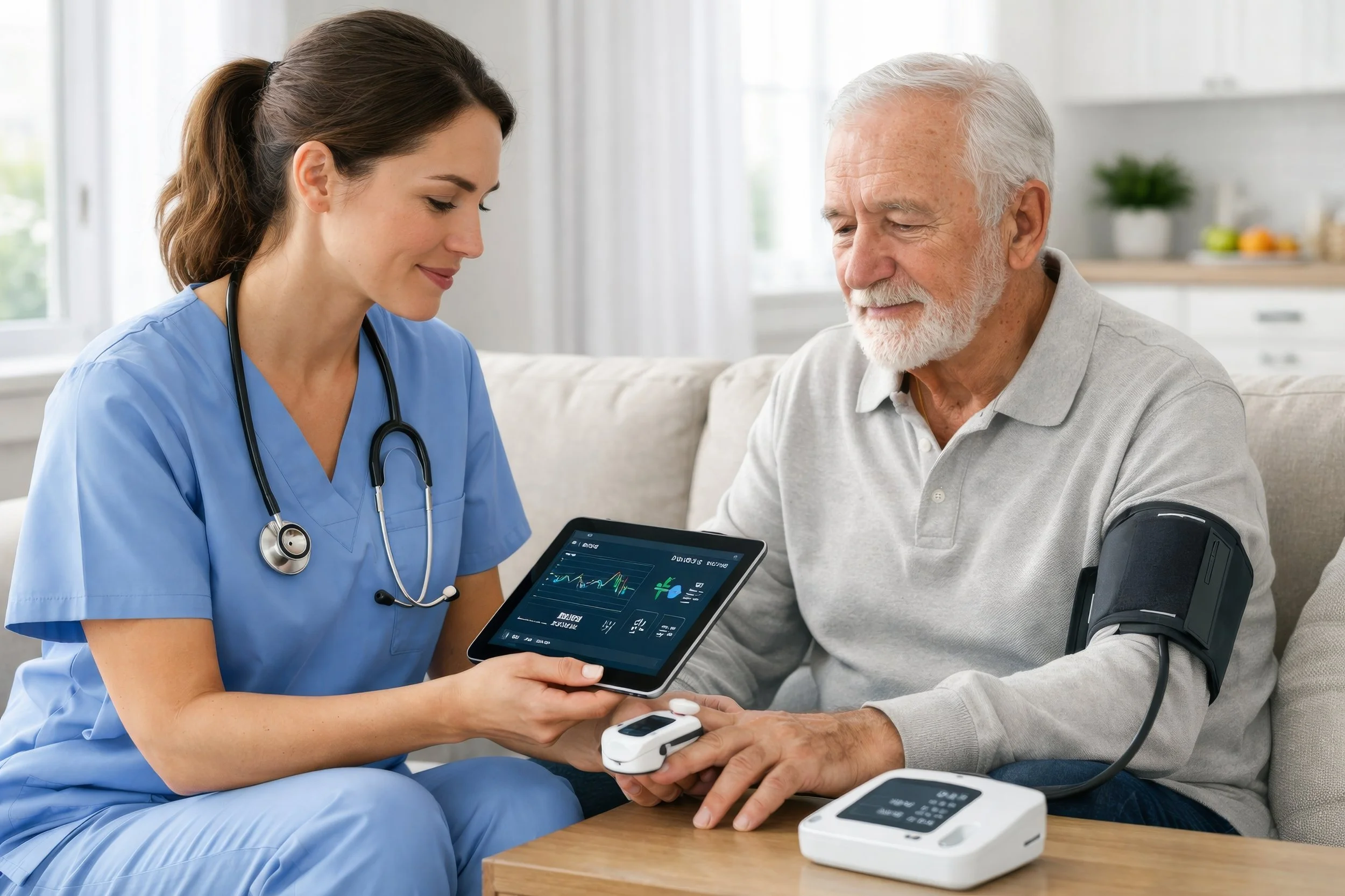
Remote Patient Monitoring, or RPM, gives your Associated Physicians Group care team a clearer view of what is happening while you are at home. Using a simple connected medical device, you take readings as directed. The device securely sends that information to your care team, where it can be reviewed for changes and trends that may need attention.
RPM can help us identify concerns earlier, make more informed treatment decisions and provide additional support without requiring an office visit for every routine reading.
How Does RPM Work?
1. Your Provider Determines Whether RPM Is Appropriate
Your provider reviews your medical history, condition and treatment goals. RPM must be medically appropriate and requires your consent.
2. You Receive a Connected Medical Device
The device is selected according to the health measurement your provider needs to follow. You receive instructions explaining how and when to use it.
3. You Take Your Readings at Home
You use the device according to your care plan. Many devices automatically transmit readings through a secure cellular or internet connection.
4. Your Care Team Reviews the Information
Your care team watches for trends or readings that may require attention. The goal is to recognize meaningful patterns and address potential problems earlier.
5. Your Care Plan Can Be Adjusted When Needed
Your care team may contact you, ask questions, provide education, schedule an appointment or discuss a possible medication or treatment adjustment with your provider.
Common RPM Devices
Connected Blood Pressure Monitor
A connected cuff measures systolic and diastolic blood pressure and usually your pulse. It is commonly used for hypertension, heart disease and monitoring the effects of medication.
Connected Weight Scale
A connected scale records changes in body weight. For patients with heart failure or fluid-retention concerns, a rapid increase may be an early sign that the body is retaining fluid.
Pulse Oximeter
A pulse oximeter measures oxygen saturation and pulse rate. It may be used for COPD, asthma, respiratory illness or other conditions affecting breathing and oxygen levels.
Blood Glucose Monitor
A connected glucose meter measures blood sugar and transmits the result to your care team. It can help show how medication, meals, activity and other factors affect glucose levels.
Some eligible patients may use a continuous glucose monitor. Qualification and coverage requirements for these devices must be reviewed separately.
Other Connected Medical Devices
Your provider may recommend another connected device that measures a clinically useful health value based on your condition and treatment plan.
See If RPM Is Right for You
Remote Patient Monitoring can make your care more continuous, informed and responsive. If you have a condition that could benefit from closer monitoring, talk with your Associated Physicians Group provider about whether you qualify.
New patients may call 888-363-8333 to request an appointment.
Remote Patient Monitoring is available only when medically appropriate. Services, devices, eligibility and insurance coverage may vary.
What Is Remote Patient Monitoring?
RPM uses connected medical devices to collect and securely transmit health information from your home to your healthcare provider. Depending on your condition, this may include blood pressure, heart rate, weight, blood oxygen or blood glucose.
Unlike writing readings in a notebook and bringing them to your next appointment, a connected device sends the information electronically. Your care team can use those readings to follow your progress, look for patterns and help manage your condition between visits.
RPM includes helping you set up and use the device, reviewing the information and communicating with you when your readings or care plan require follow-up.
Who Is Remote Patient Monitoring For?
RPM may help patients with an acute or chronic condition that requires ongoing monitoring, including:
High blood pressure
Heart failure or cardiovascular disease
Diabetes
COPD
Asthma or other respiratory conditions
Significant weight or fluid changes
Recovery following hospitalization, illness or a procedure
A new diagnosis, treatment plan or medication change
RPM may be particularly helpful when your condition can change between appointments, your readings have been difficult to keep within their target range or your provider needs more information than a single office reading can provide.
You do not necessarily need to be seriously ill to benefit. RPM may be used proactively to improve control of a condition before it causes complications.
Eligibility and the length of monitoring depend on medical necessity, your care plan and insurance coverage.
-
It depends on the device. Many RPM devices have their own cellular connection and work without a smartphone or home Wi-Fi. Our team will explain the requirements for your device.
-
The devices are designed for home use, and you will receive assistance with setup. Most readings take only a few minutes.Description text goes here
-
Your provider will give you a schedule based on your condition, treatment goals and insurance requirements. Consistent use helps your care team recognize meaningful trends.
-
Qualified members of your care team review the transmitted information under the supervision of your healthcare provider. When a reading or trend needs attention, the appropriate team member may contact you.
-
RPM information is transmitted through a secure system designed to protect your health information. Associated Physicians Group and its service partners follow applicable privacy and security requirements.
-
No. RPM supports your care between appointments but does not replace examinations, testing or visits your provider considers necessary.
-
No. RPM readings may not be watched continuously or reviewed immediately. Do not use an RPM device to report an emergency. If you have severe symptoms or believe you are experiencing a medical emergency, call 911.
Why Is Monitoring at Home Helpful?
An office reading represents one moment in time. RPM can provide a more complete picture of how your health changes throughout your normal routine.
This information may help your care team:
Recognize concerning trends earlier
Evaluate how well treatment is working
Make decisions using information from your daily life
Provide education and support between appointments
Reduce unnecessary trips for routine measurements
Address a potential problem before it becomes more serious
RPM does not replace regular appointments, diagnostic testing or hands-on medical care. It gives your provider another useful tool for managing your health.

Chronic Care Management
More Support for Managing Your Health Between Appointments
Living with more than one chronic condition can make healthcare complicated. You may have several medications, appointments with different specialists, recommended tests and treatment instructions that are difficult to keep organized.
Chronic Care Management, or CCM, gives eligible patients ongoing support between regular office visits. Your Associated Physicians Group care team works with you to create and maintain a personalized care plan, review your medications, coordinate with other healthcare providers and help you stay on track with the care you need.
The goal is simple: make your healthcare more connected, more manageable and more responsive to changes in your health.
How Does Chronic Care Management Work?
1. Your Provider Determines Whether You Qualify
Your provider reviews your diagnoses, health risks and care needs. Medicare generally requires at least two chronic conditions that are expected to last at least 12 months and place you at significant risk of worsening health, hospitalization or loss of function.
An office visit, Annual Wellness Visit or other qualifying visit may be needed before CCM begins, particularly if you are a new patient or have not been seen recently.
2. You Choose Whether to Participate
CCM is voluntary. Before services begin, your care team explains how the program works, any possible out-of-pocket responsibility and your right to stop participating. Your verbal or written consent is documented in your medical record.
Only one healthcare practitioner can provide and bill Medicare for CCM services during a calendar month. Tell us if another practice is already providing a similar care-management service.
3. We Develop Your Personalized Care Plan
Your care plan brings important information about your health into one organized resource. It may include:
Your chronic health conditions
Your medications and allergies
Your treatment goals
Your symptoms and health concerns
Planned treatments and recommended preventive services
Your specialists and other healthcare providers
Your functional, emotional and social needs
Support available from family, caregivers and community resources
The plan is reviewed and updated as your health, medications or treatment needs change.
4. Your Care Team Supports You Each Month
Members of your care team spend time each month helping manage your care. This work often takes place outside an office visit and may include reviewing your health information, communicating with you, coordinating services and following up on your care plan.
5. We Help Keep Your Care Connected
When you see a specialist, receive treatment at another facility, visit the emergency department or leave the hospital, important information can become fragmented. CCM helps your providers share information, clarify instructions and keep your overall treatment plan moving in the same direction.
Who Is Chronic Care Management For?
CCM may be appropriate for patients who have two or more chronic conditions expected to last at least one year or for the remainder of their lives.
Qualifying conditions may include:
High blood pressure
Diabetes
Heart disease
Heart failure
Atrial fibrillation
Chronic obstructive pulmonary disease, or COPD
Asthma
Arthritis
Depression
Alzheimer’s disease or another form of dementia
Cancer
Chronic kidney disease
High cholesterol
Glaucoma
Other ongoing physical or behavioral health conditions
This is not a complete list. Eligibility is based on your combination of conditions, how they affect your health and whether ongoing care management is medically appropriate.
What Is Chronic Care Management?
Chronic Care Management is a Medicare-covered healthcare service for eligible patients who have two or more serious chronic conditions expected to last at least 12 months or for the remainder of their lives.
CCM extends your care beyond individual office appointments. It provides organized, ongoing assistance from your healthcare team each month to help manage your conditions and reduce gaps between providers, prescriptions, tests and treatment plans.
Depending on your needs, Chronic Care Management may include:
A personalized, comprehensive care plan
Regular communication with your care team
Medication review and support
Coordination with specialists, pharmacies, testing facilities and other providers
Follow-up after an emergency department visit, hospitalization or rehabilitation stay
Help arranging recommended appointments, tests or community services
Support for preventive care and health goals
Access to qualified healthcare professionals for urgent needs
CCM does not replace your regular appointments. It provides an additional layer of support between visits.
CCM may be especially helpful if you:
Take several prescription medications
See multiple physicians or specialists
Have difficulty keeping track of appointments or treatment instructions
Have recently visited the emergency department or been hospitalized
Need help following through with tests, referrals or preventive care
Have experienced changes in your symptoms, mobility or ability to manage daily activities
Want a more organized connection to your healthcare team between appointments
How Can Chronic Care Management Help?
When several conditions are treated separately, it can be difficult to see how they affect one another. CCM helps your care team consider the full picture.
Ongoing care management may help:
Keep your medications and treatment plans organized
Improve communication among your providers
Identify missing appointments, tests or preventive services
Address questions before they become larger problems
Support you after a hospital or emergency department visit
Help you understand and work toward your health goals
Reduce the stress of managing complicated healthcare needs
Give family members and caregivers clearer information when appropriate
CCM cannot guarantee that complications, emergency visits or hospitalizations will be prevented. It is designed to improve continuity, communication and support so potential concerns can be addressed more effectively.
What Services Are Included?
A Comprehensive Care Plan
Your care team develops and maintains an electronic plan centered on your health problems, treatment goals, medications, providers, needed services and personal support system.
Medication Review and Management
Your medications can be reviewed for accuracy, possible interactions, refill concerns and whether you understand how to take them. Your care team can also help communicate medication questions to the appropriate provider.
Coordination With Specialists and Other Providers
CCM can help connect your primary care provider with specialists, pharmacies, laboratories, imaging centers, home-health providers and community services involved in your care.
Help During Care Transitions
Your care team may follow up after an emergency department visit, hospitalization, skilled nursing stay or other change in care setting. This can help clarify discharge instructions, medication changes and needed follow-up appointments.
Preventive Care Support
CCM can help identify screenings, vaccinations, wellness visits and other preventive services that may be due.
Ongoing Communication
You or your caregiver have a way to communicate with the care team about your conditions and care plan. A designated team member helps maintain continuity and stays familiar with your needs.
Access for Urgent Needs
CCM includes access to qualified healthcare professionals for urgent concerns at any time. This access supports guidance and continuity of care, but it is not a replacement for 911 or emergency medical treatment.